
4 hr
Soweto Walking Tour with Local Guide and Lunch
Discover the heart of Soweto on foot with a resident guide—history, culture, and authentic local flavors
Reserve
Hand-picked by our editors — only the best 5 experiences from 12 reviewed.
Verified partners for every tour, free cancellation where available, and instant confirmation on every booking.
4 hr
Discover the heart of Soweto on foot with a resident guide—history, culture, and authentic local flavors
Reserve
8 hr
Discover South Africa's journey to democracy through iconic sites, powerful memorials, and historic townships
Reserve
4 hr
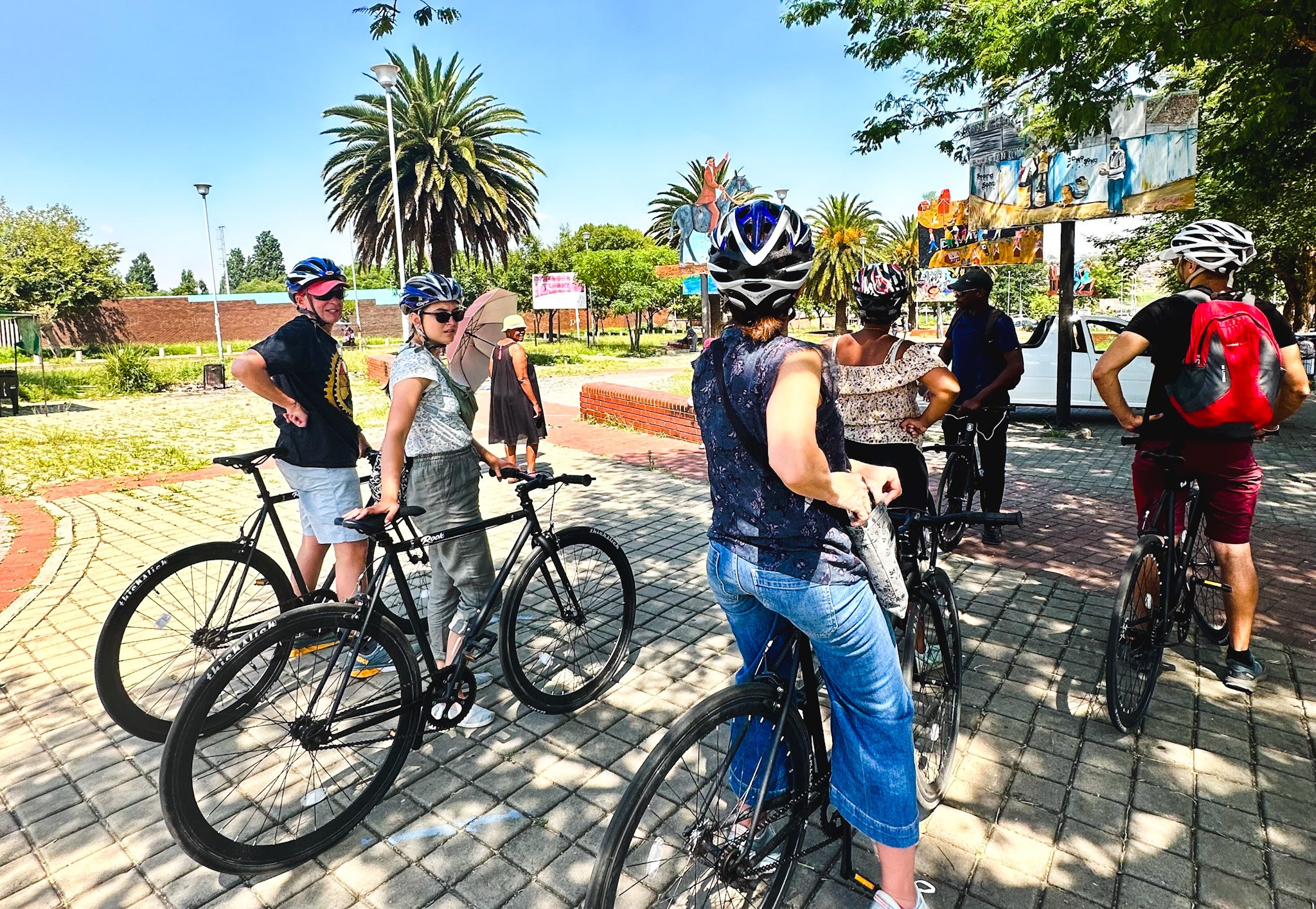
Pedal through historic township streets, visit Mandela's former home, and taste authentic South African cuisine
ReservePrices from verified partners. Availability updates in real time at checkout. Free cancellation policies apply where shown.
The landmarks, rooms, and views travelers on this tour remember — all visible on a single visit.
The former home of Nelson Mandela features exhibits on his life in the 1940s and 1950s. It stands as a modest symbol of the anti-apartheid movement.
This landmark commemorates the 1976 student uprising that changed South African history. It includes a museum with photographs and video displays.
Famous as the only street in the world to have hosted two Nobel Prize winners. It serves as a cultural hub for locals and visitors alike.
Known as the People's Church, it served as a sanctuary during the liberation struggle. It hosted many historic political meetings during the 1980s.
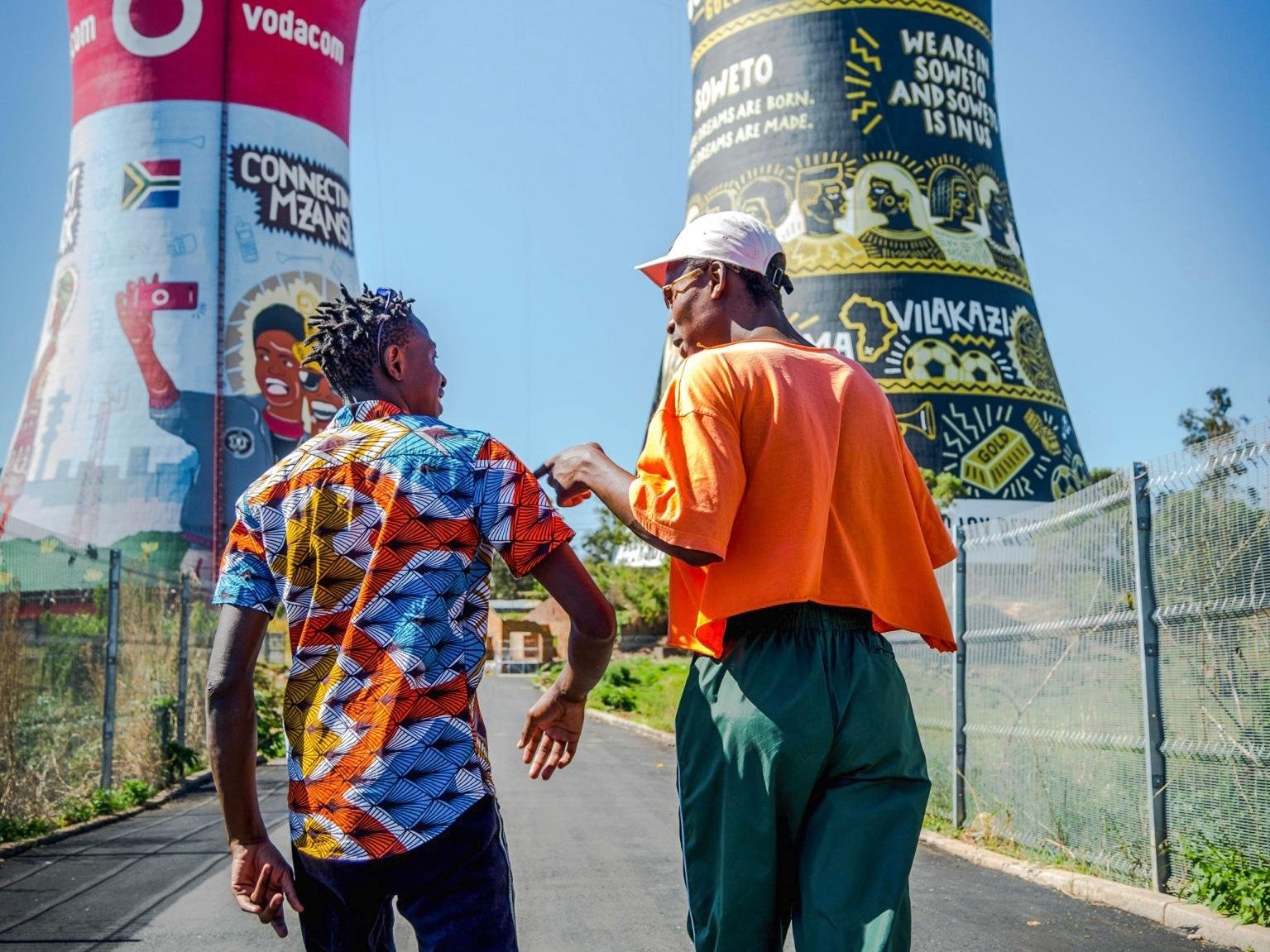
These former cooling towers are now painted with vibrant murals and function as a landmark for adventure seekers. They reach over 100 meters in height.
The walking experience offers intimate community connection, while the bicycle tour provides broader access to Johannesburg landmarks and heritage sites. Choosing between these soweto walking tour with lunch tours depends on whether you prefer deep local engagement or covering more distance.
| Feature | Top pick Walking Tour | Bicycle Tour |
|---|---|---|
Pace and Intensity |
Slow and meditative | Moderate physical exertion |
Accessibility |
Open to all fitness levels | Requires basic cycling ability |
Area Coverage |
Focused on immediate neighborhood | Extensive township exploration |
Interaction with Locals |
High proximity for conversation | Passing waves and greetings |
Equipment Requirements |
Comfortable shoes needed | Bicycle and helmet provided |
Group Dynamics |
Small intimate walking cohorts | Dynamic group cycling formation |
| See tickets → |
Verdict: Select the soweto walking tour with lunch tickets if you prioritize face-to-face cultural immersion, or opt for the bicycle tour if you want to maximize your ground coverage in this historic area.
Choose your ticket, select your date, and reserve in under two minutes. Secure checkout handled by our verified partner.
Instant confirmation by email, with a mobile voucher you can save offline. No printing, no queuing at a collection desk.
Arrive at the entrance, show your voucher on your phone, and walk in. Most tickets include priority or skip-the-line access.
Practical details for your visit straight from our verified partners — hours, access, rules, and how to get there.
Soweto, Johannesburg
Look for the guide holding a sign
Use the Metrorail to Mzimhlophe station.
Hire a registered shuttle service directly to the site.
Follow signs toward Soweto from the M1 highway.
Wear comfortable walking shoes suitable for paved and gravel paths. Modest attire is recommended when visiting local community landmarks during your soweto walking tour with lunch.
Keep valuables close to your body and minimize large bags. Security is maintained by local guides who manage the soweto walking tour with lunch logistics throughout the day.
Photography is generally encouraged for personal use at public sites. Please respect local privacy when capturing photos of residents during your soweto walking tour with lunch.
Some areas of Soweto feature uneven pavement. Ensure your soweto walking tour with lunch booking specifies any mobility requirements in advance.
Mobile phones may be used to document the journey. Maintain awareness of your surroundings at all times.
The soweto walking tour with lunch is suitable for children accompanied by adults. Educational content provides historical context for younger participants.
The lunch component is included as specified in your booking. Bottled water is recommended during your soweto walking tour with lunch.
Pets are not permitted on group tours. Service animals should be cleared with the operator prior to arrival.
Guides provide historical insights into the struggle for democracy. The soweto walking tour with lunch supports local economy initiatives.
Best time to go, insider tips, nearby landmarks, and the cancellation fine print — flip through to skim what matters to you.
How crowds, weather, and events shift across the year.
High temperatures with occasional afternoon thunderstorms.
Cooler, pleasant temperatures ideal for walking.
Crisp, sunny days perfect for exploring without heat.
Mild weather with blossoming local vegetation.
Small details that turn a good visit into a great one.
Reserve your soweto walking tour with lunch slots in advance to ensure guide availability.
Greet residents politely when walking through neighborhoods.
Follow your guide closely to gain maximum insight into the area.
Tipping is appreciated for exceptional service during your soweto walking tour with lunch.
Verify the forecast to dress appropriately for the Gauteng climate.
Bring water to stay comfortable during the active portions of the day.
Ask questions to enhance your soweto walking tour with lunch experience.
Non-bookable sights within a short walk — free to visit, easy to pair.
Dedicated to the 1976 student uprising participants.
The former residence of Nelson Mandela in Soweto.
A center for anti-apartheid activism and community.
A historic site for political and sports events.
Flexible, no hidden fees.
Full refunds are typically provided for cancellations made at least 24 hours in advance. As there is no entrance fee, this policy applies strictly to the service component of your soweto walking tour with lunch.
Hand-picked options within walking distance — pick a district for vibe, or a specific hotel for convenience.
Upscale historic hotel in the heart of Soweto.
Popular social base for township visitors.
Local family-run stays throughout the township.
Soweto exists because the apartheid government declared Johannesburg's southwest townships a segregated zone in 1963, consolidating twenty-six neighborhoods under one administrative name: South Western Townships. The acronym stuck. Today the area covers 130 square kilometers and is home to 1.3 million people, making it one of Africa's most densely populated urban residential zones and a living archive of South Africa's liberation struggle. Vilakazi Street in Orlando West remains the only street in the world where two Nobel Peace Prize laureates—Nelson Mandela and Desmond Tutu—once lived as neighbors. Mandela's brick home at number 8115, now a museum, preserves the rooms as they were in the 1950s: a narrow kitchen, a coal stove, family photographs on whitewashed walls. The street itself was tarred only in 2000. Archbishop Tutu's house, still a private residence, sits a few blocks away. Both men attended the same church, Regina Mundi, whose walls still bear bullet holes from the 1976 student uprisings when police fired into the congregation. The altar was destroyed by tear gas canisters; parishioners rebuilt it from marble donated by Italian stonemasons. A Soweto walking tour with lunch offers structured access to sites that remain inaccessible by private vehicle—narrow lanes between matchbox houses, shebeen courtyards, family-run spaza shops—led by guides who grew up in the township and can translate the social geography visitors miss. Most guided walks depart from Vilakazi Street between 9:00 and 14:00, covering two to three kilometers over three hours, with stops at the Hector Pieterson Memorial, Freedom Square, and local craft cooperatives. Lunch is served in a township tavern or private home, typically pap and vleis, chakalaka, morogo, and ginger beer brewed on-site. The Hector Pieterson Memorial honors the twelve-year-old boy shot during the 1976 Soweto Uprising, when fifteen thousand students marched against the imposition of Afrikaans as the medium of instruction in schools. The photograph of Mbuyisa Makhubo carrying Pieterson's body became the defining image of the anti-apartheid movement. The museum adjacent to the memorial uses oral histories, police transcripts, and student testimonies to document the hundred-day revolt that followed, which spread to townships nationwide and accelerated international sanctions. Walking tour itineraries typically allocate forty minutes here. Guides who were students in 1976 lead many of the heritage tours, adding firsthand memory to the archival record.
"Vilakazi Street remains the only street in the world where two Nobel Peace Prize laureates once lived as neighbors."
A step-by-step walkthrough of the visit — what you'll see, how long each stage takes, and the details that matter.
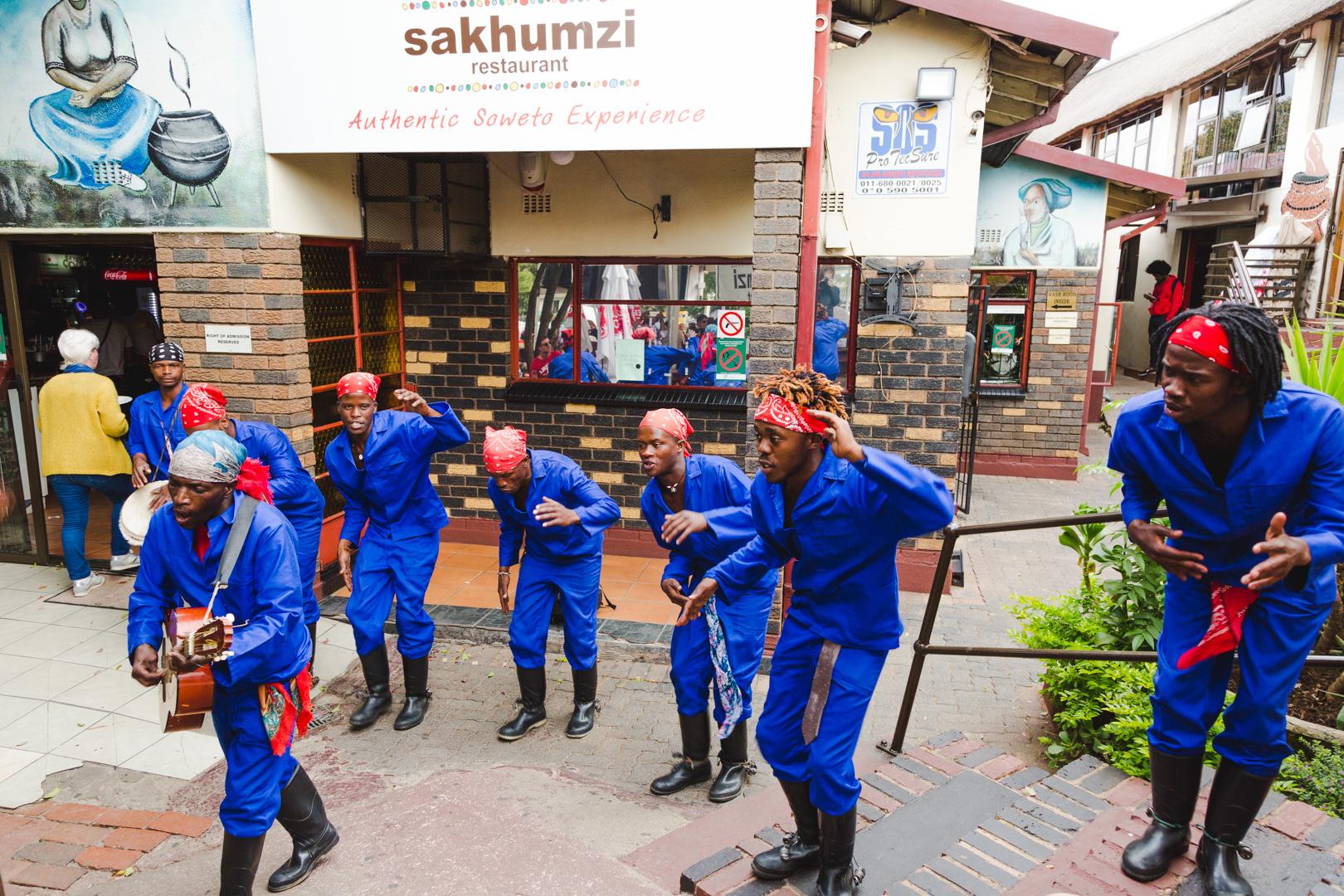
You meet your guide at the Vilakazi Street corner near Mandela's house, where the morning light catches the corrugated iron roofs stretching to the horizon. The group is small—six to eight walkers—and your guide begins with his own story: where he grew up, which school he attended during the uprisings, which shebeen his grandfather ran. You walk east, past murals of Miriam Makeba and Walter Sisulu, stopping at a spaza shop where the owner explains how township micro-economies operate. Children wave from doorways. The guide translates graffiti tags and points out architectural shifts—from matchbox houses built by the apartheid government to modern brick extensions families added after 1994. At the Hector Pieterson Memorial you stand in front of Sam Nzima's photograph, enlarged to wall size, while your guide recounts June 16, 1976, in present tense: where the students gathered, which streets the police blocked, how the tear gas drifted into Regina Mundi. You walk to the church next, its interior cool and silent, and see the bullet scars preserved in the plaster. Lunch is served at a local tavern or in a guide's family home: communal plates of pap, beef stew, chakalaka, and sweet morogo greens. You sit at a long table with other travelers and township residents, passing bowls, drinking homemade ginger beer from glass bottles. The meal lasts an hour. Afterward, the guide walks you back to Vilakazi Street, where taxis idle and vendors sell beadwork under canopies.
The tour operates daily from 09:00–17:00.
No, Soweto is a residential township and there is an entrance fee of 0 ZAR for public access.
Most walking experiences last approximately 3 to 4 hours including the meal.
The best arrival window for your visit is between 09:00–14:00 to ensure a full experience before closing.
Yes, families are welcome on our Soweto cultural tours.
Yes, please check the live product grid to see if private options are available.
Bring comfortable walking shoes, sun protection, and a water bottle for your soweto walking tour with lunch.
Yes, a traditional lunch is a core feature of the soweto walking tour with lunch package.
You can reach the site by car, taxi, or public transport to the main hub in Soweto.
Full refunds are available for cancellations made at least 24 hours prior to your soweto walking tour with lunch.